The Sanctuary · Presence
This Is What a Day
Looks Like.
No alarm. The sea before the world gets loud. A journal, three questions, and someone who is really listening.
I want to tell you what a day here actually looks like.
Not the brochure version. The real one.
· · ·There is no alarm. That's the first thing. You wake up when your body is ready — and if you haven't been letting it do that, you might be surprised how long that takes. The first morning, some people sleep until nine. That's not laziness. That's the beginning.
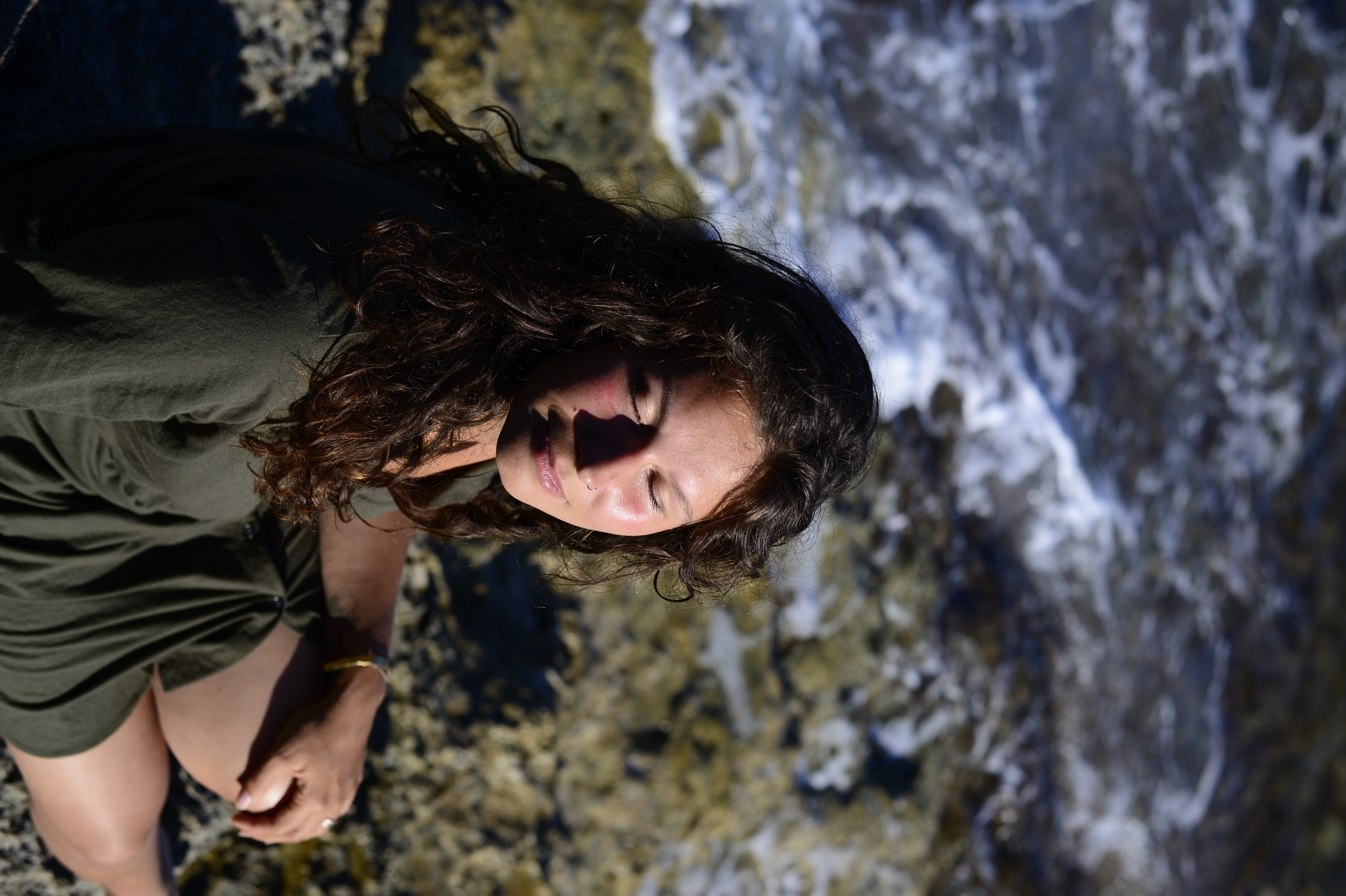
If the timing is right, we walk down to the water before breakfast. We don't talk much. We put our feet in the sea and we just stand there. The sea has a way of reminding you that you are small — in the best possible sense. That you are part of something so much larger than the life you have been managing.
It's a good way to begin a day.
Breakfast is real food, made with care, eaten slowly. We sit outside when we can. The conversation is easy — how did you sleep, how do you feel — and sometimes something important comes up right there, over coffee, before the day has even properly started. I've learned not to rush past those moments.
After breakfast, thirty minutes for yourself. Walk, stretch, write, do nothing. Whatever your body asks for. This is yours.
· · ·Then we come together, and I give you a journal.
A beautiful one — something you'll want to keep. Inside are three questions. You take twenty minutes with them. Writing, or staring into the trees, or both. I stay close but I don't hover. I'm already feeling into your energy, noticing what's alive in you today, beginning to sense what this particular day wants to offer you.
We talk about what came up. We set an intention — not a goal, an intention. There's a difference. A goal is something you push toward. An intention is something you move with.
Then we go out into the world.
· · ·Maybe we hike. Maybe I take you to my cave.
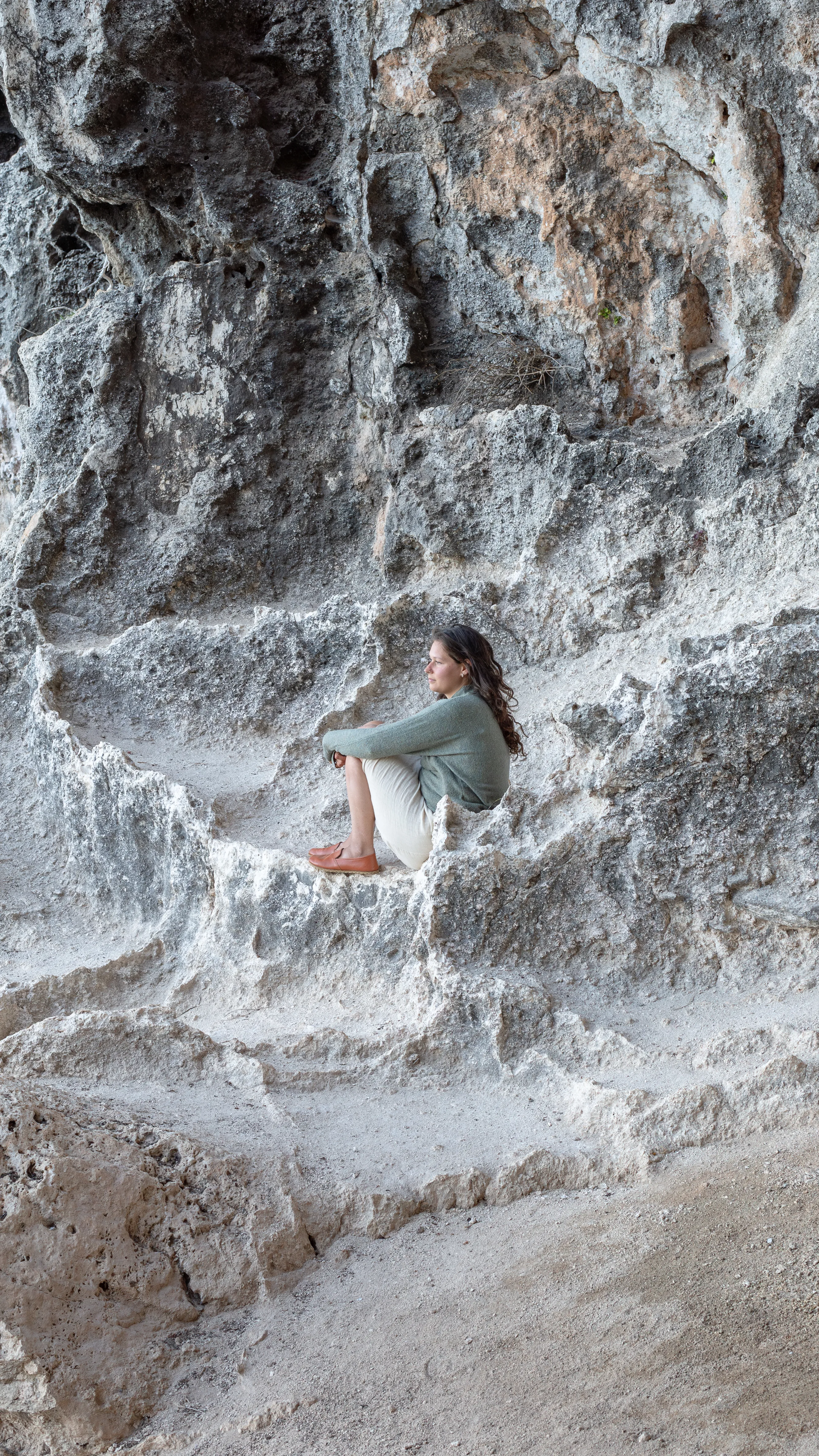
The cave is hard to describe. It's a place where something in you gets very quiet very fast. Where the boundary between your inner world and the world around you becomes — I don't know how else to say this — beautifully unclear. I've brought people there who don't think of themselves as spiritual at all, and they feel it too. You don't need to believe in anything. You just need to show up.
While we're walking or driving, I'm already with you. Not just listening to what you're saying, but to what's underneath it. Noticing what you almost say and then don't. Feeling into what you're carrying today.
And when we sit down — that's when it happens.
Not because I make it happen. Because the conditions are finally right for it to happen on its own. I ask the question that goes one layer deeper. I stay with you in the discomfort without flinching. The thing you've been carrying — the thing you might not even have words for yet — finally has somewhere to go.
Are you riding the waves, or are you fighting them? Because the more you fight them, the more they stay bundled up inside you.
There is no judgment here. Not for any of it. And sometimes, right in the middle of something very real and very tender, we laugh. Because the human experience is genuinely, absurdly funny sometimes. How hard we work to avoid simply being ourselves. How much energy it costs to carry what we're carrying. We laugh, and then maybe we cry, and then we laugh again. That's not a detour from the work. That is the work.
· · ·Then we have lunch.
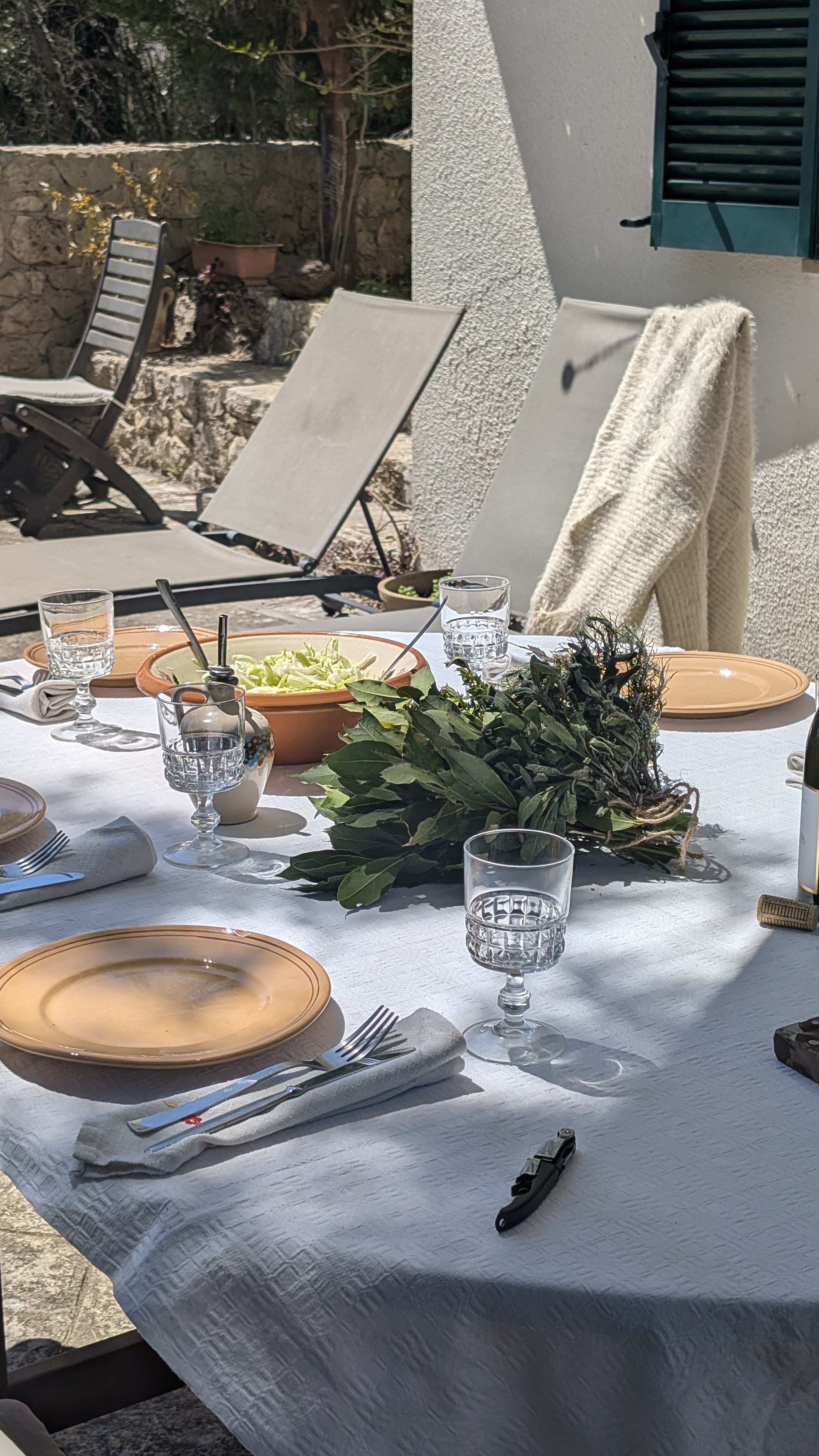
Long, slow, Italian lunch. Multiple dishes. A glass of wine if you want one. Real conversation, the kind that goes somewhere. The pleasure of being in a beautiful place eating food that was made with love.
I want you to understand something: this is not a break from the work. This is the work. I am showing you — every day, through every meal, through the slowness and the beauty and the refusal to rush — what I actually believe life is supposed to feel like.
Not running from one thing to the next. Not eating standing up. Not being anywhere other than exactly here, at this table, in this light, in this conversation.
We are supposed to slow down. To enjoy. To connect. To laugh and cry and appreciate the extraordinary ordinary fact of being alive.
· · ·After lunch, we separate for two hours.
You go wherever you need to go — your room, the rocks, the sea, sleep. Let the morning settle into your body. Don't rush past it.
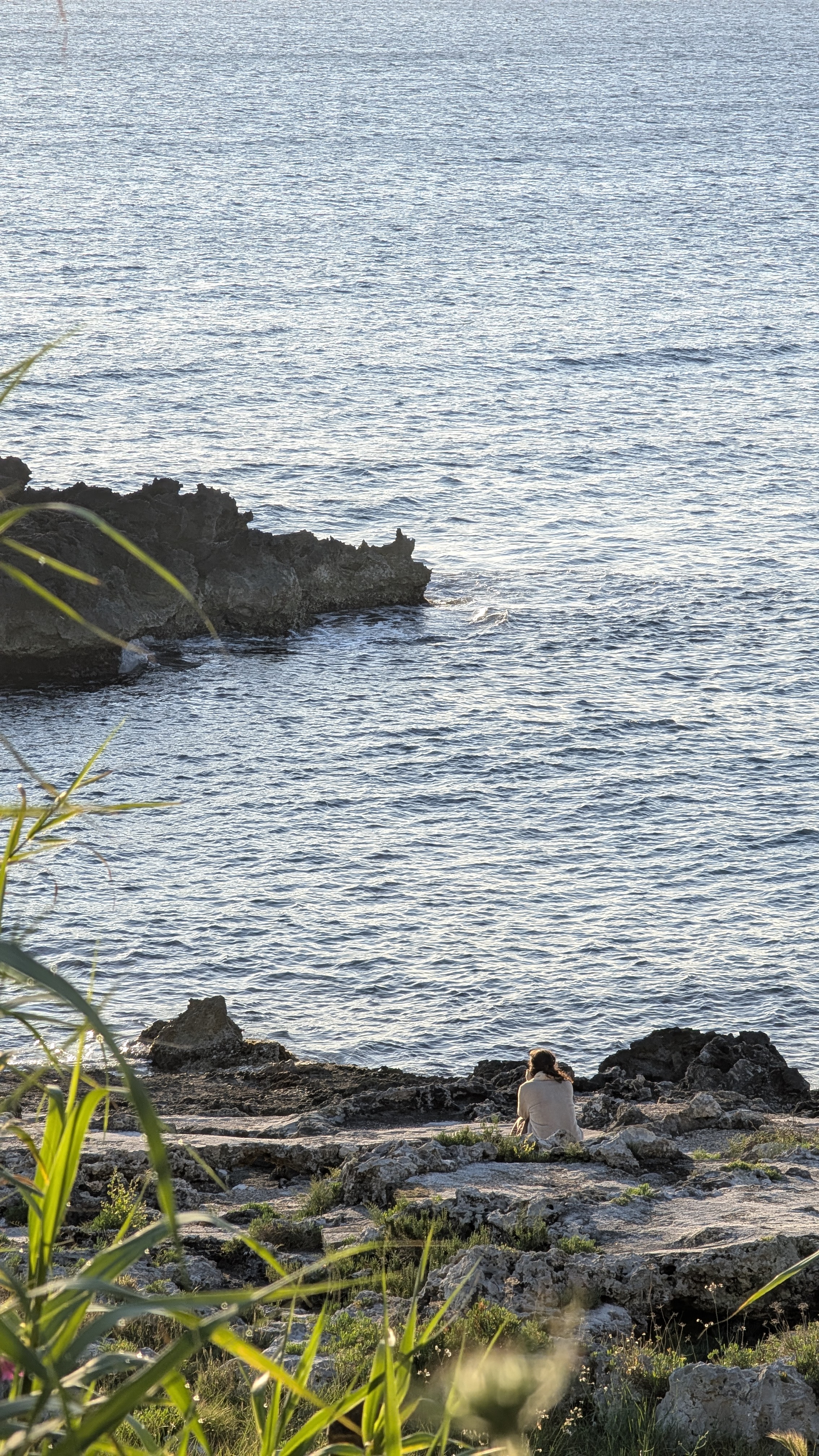
I do the same. I want to be honest with you about this: I absorb a lot. My sensitivity is probably my most useful tool in this work, and it is also the thing that needs the most tending. These two hours are how I come back to you full. Not because I've checked out — because I've gone back in, released what isn't mine, and returned to myself. So that when we come back together in the afternoon, I am genuinely there.
· · ·The afternoon continues the thread. Sometimes I take you into my treatment room — soft light, soft music, hands on body and energy both. You don't need to understand how it works. You only need to be willing to receive. Things release here that couldn't release through talking. Sometimes you cry. Sometimes you fall into a stillness you haven't felt in years. Sometimes you come out and you don't have words for what happened — and that's fine. We sit with it.
The evening slows further. Maybe we cook together. Maybe we go out. When the temperature is right I make a fire, and we sit with the day — what moved, what surprised you, what you're starting to feel. You write. You rest. You notice, maybe with some surprise, how much has shifted in just these few hours.
The evening closes gently. This is not a programme that runs until midnight. We honour the rhythm of a day that was actually lived.
· · ·And tomorrow, we go deeper.
That's what five days here looks like. It's not a schedule. It's not a syllabus. It's a container — held carefully, shaped around you — in which something real can finally move.
If something in you recognises what I'm describing, I'd love to hear from you.
— NikitaLetters like this one, now and then.
Not often. Not rushed. When something is ready to be said, it arrives in your inbox. Nothing else.