The Fire Season · The Sanctuary
What Happens
Around the Fire.
Why I light one every single day in winter, what people do with a pen and a piece of paper once the flames are going, and why December here is nothing like December anywhere else.
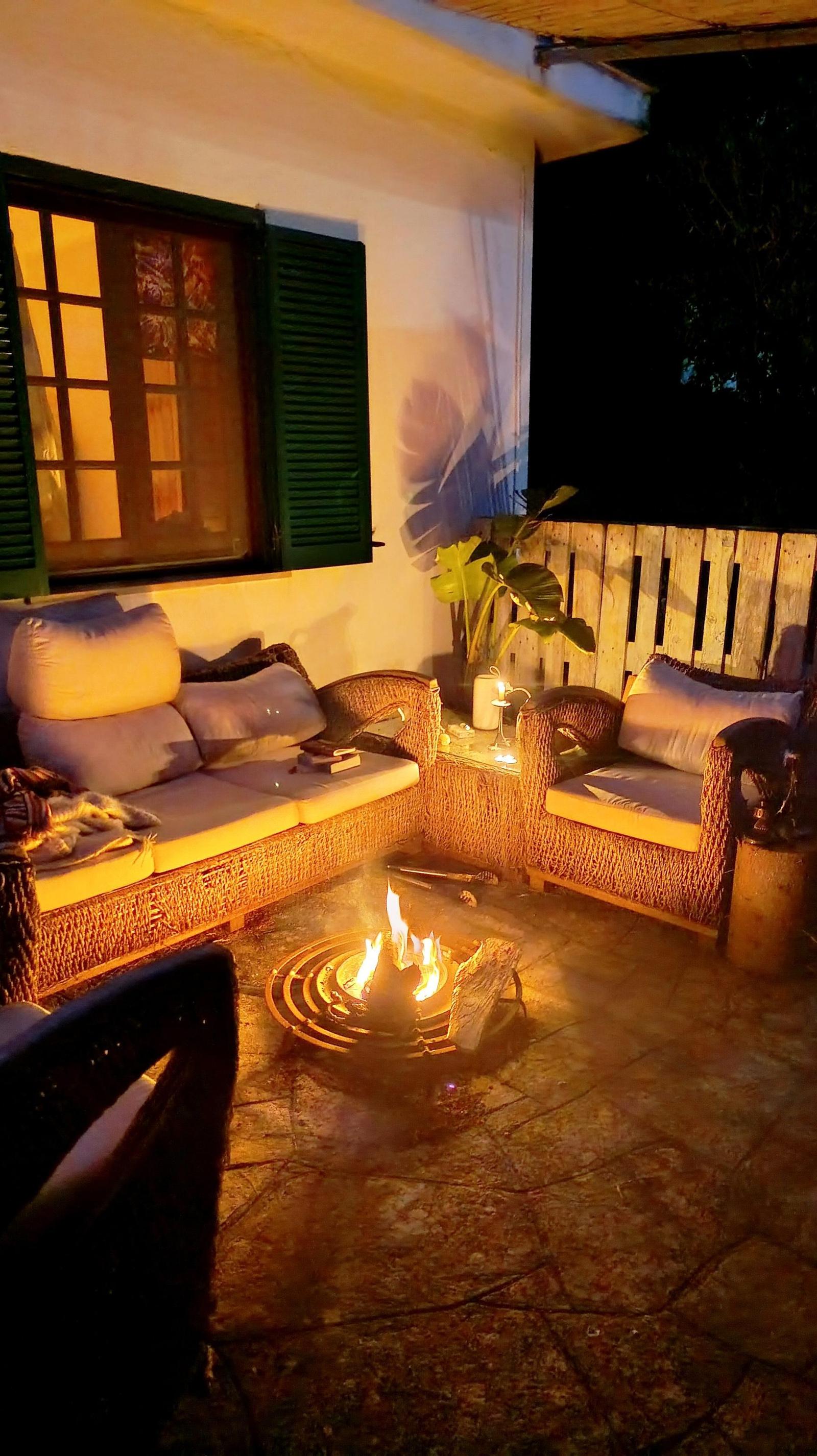
People assume the sanctuary closes in winter. It doesn't. It changes.
The sea turns wild. The town empties out. The bars along the port shutter one by one, and by December there are maybe three of us walking the same stretch of coast in the morning. Most people hear this and imagine something bleak. It isn't bleak at all. It is the most honest time of the year here, and it is the time I would choose for myself if I were the one coming.
Let me tell you what it actually looks like.
First: it is not cold.
I say this because everyone gets it wrong. People picture Italy in December and think of snow, of grey, of huddling. Salento sits at the very bottom of the country, between two seas, and in the middle of a December day it is usually somewhere between twelve and fifteen degrees. You walk in a sweater. The light is low and long all day, the way it only is in winter, and it makes the limestone look like it is lit from inside.
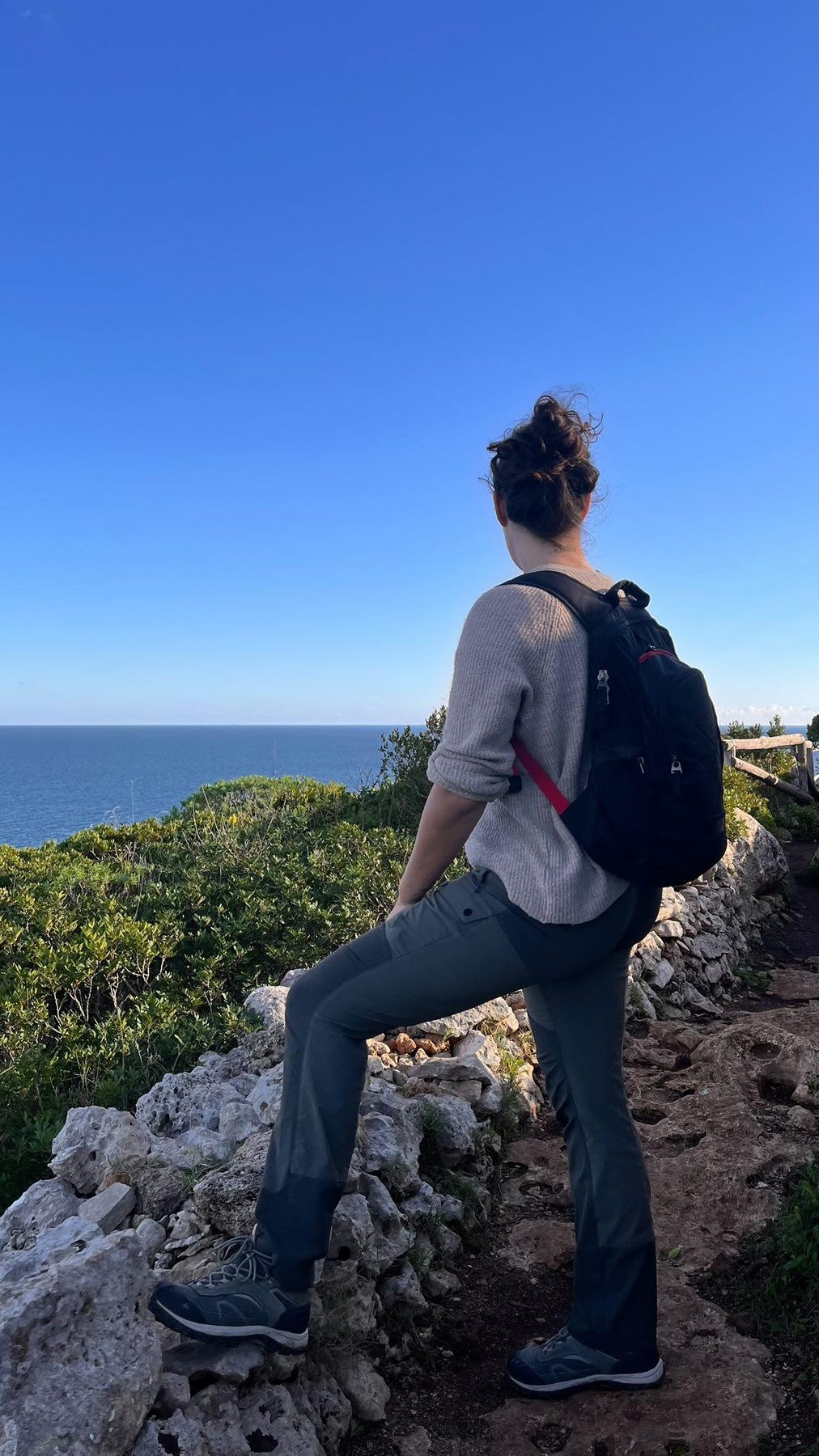
The coast path in winter — nobody on it
When it is clear, we walk. The coast paths that are crowded in August belong to nobody in winter, and you can go for two hours and meet a farmer and his dog and that is all. The sea in January is a colour it never is in summer, a kind of hard blue that makes you stop walking to look at it.
And when it rains, it really rains — the kind that comes sideways off the Adriatic for a day and a half and then stops completely. Those are the days we stay in. The kitchen, the practice room, the wheel if someone wants to make something with their hands. Nobody has ever complained about a rainy day here. It gives permission that a sunny day somehow doesn't.
And then, every single day, there is a fire.
I make one every day in winter. Not for a special occasion, not because guests are coming. Every day. It has become the thing my whole day bends towards, and it took me a while to understand why.
A fire does something to a room full of people that nothing else does. Everyone faces the same direction. Nobody has to hold eye contact. Your hands are busy doing nothing. And there is a sound, and a movement, and a warmth on the front of your body, so the part of you that is usually scanning the room for what is expected of you finally has something else to do.
That is when people start talking. Not immediately. Usually about forty minutes in, when the first logs have collapsed into embers and somebody has stopped checking their phone. Then a sentence comes out that would never have come out at a table.
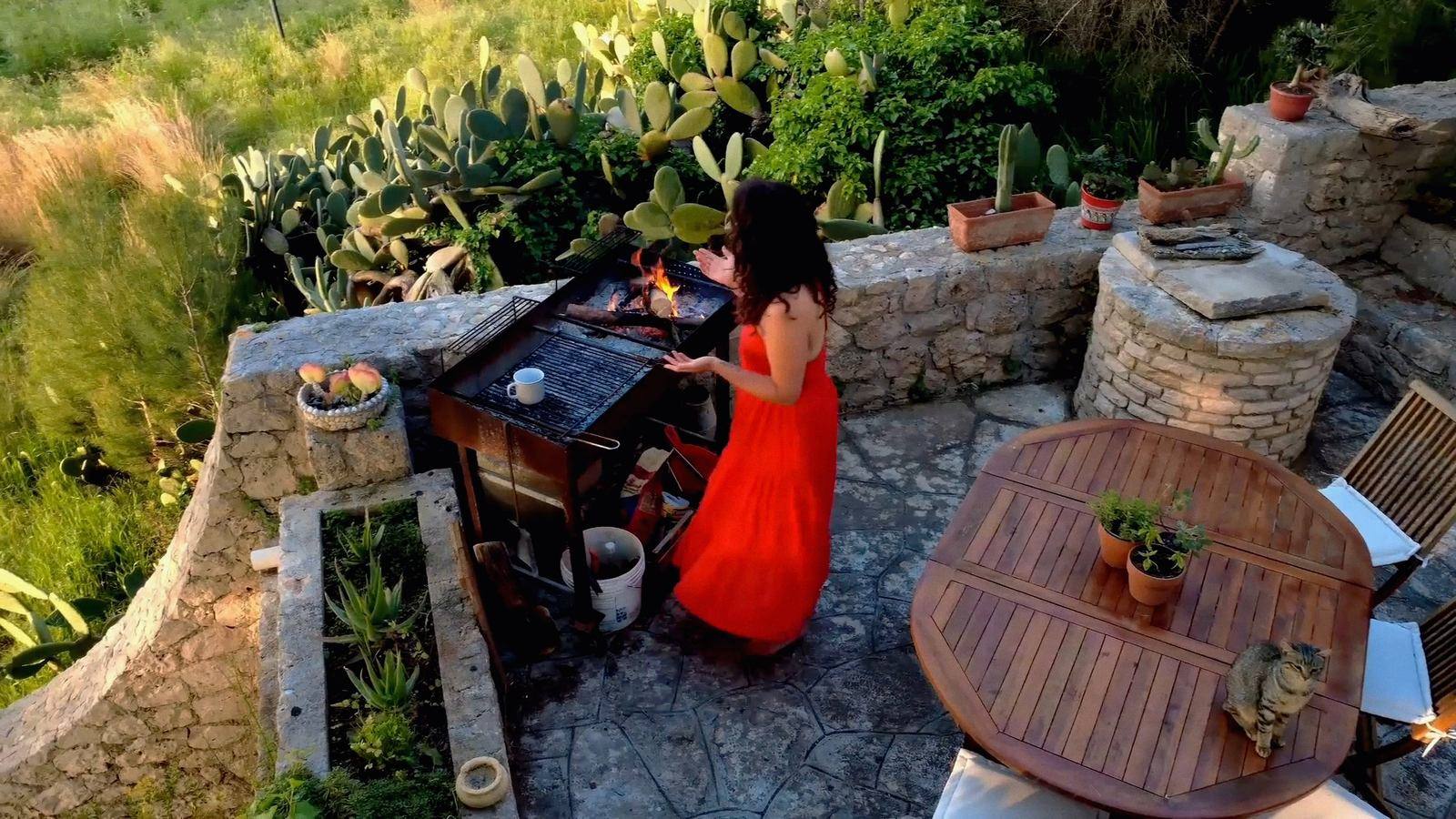
The writing and the burning.
Here is the thing I do that I did not invent and will never stop doing.
You write something down. Whatever it is. The sentence you have been carrying, the thing you have not said, the name, the year, the version of yourself you are done being. It does not have to be neat. Nobody reads it. Nobody will ever read it.
Then you put it in the fire. And you watch it go.
I know how that sounds written down. I was trained in psychiatry; I spent years being taught that the work happens in language, between two people, in a room with a clock in it. And then I moved here and started making fires, and I watched people do something with a folded piece of paper that six months of talking had not managed.
I think it is because the body needs to see it happen. You can decide a hundred times to let something go, and your body does not believe you, because nothing occurred. Burning it is something occurring. There is a before and an after, and you were there, and you watched. Afterwards people sit very quietly for a while. Almost nobody cries in the moment. A lot of people cry about twenty minutes later.
What else the fire is for.
It is not all solemn. Most evenings there is food — something slow, because winter cooking here is all slow — and wine, and someone puts music on, and it turns into the kind of evening that runs to two in the morning without anyone deciding it should. We grill things over it. We dry wet boots next to it. Friends come by without being invited, because that is how it works in a town of this size in winter.
And sometimes it is just me. I sit with it before anyone is awake, or after everyone has gone, and I do the thing I don't usually describe on a website: I talk. To the fire, to the sea, to whatever it is that brought me to a place I had never seen and told me to stay. I am not going to give it a name. I have found that the people who understand what I mean don't need one.
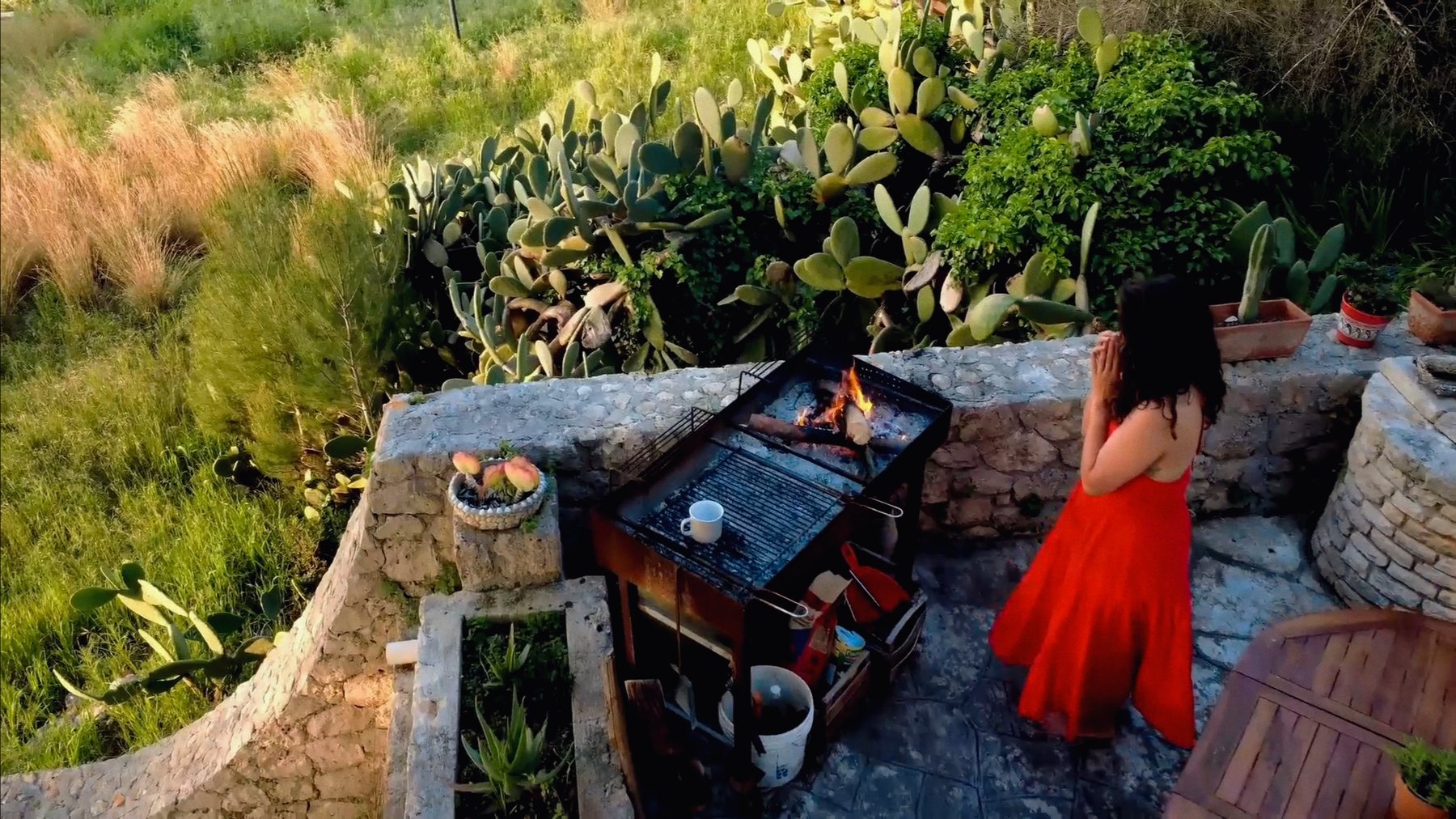
Before anyone is awake
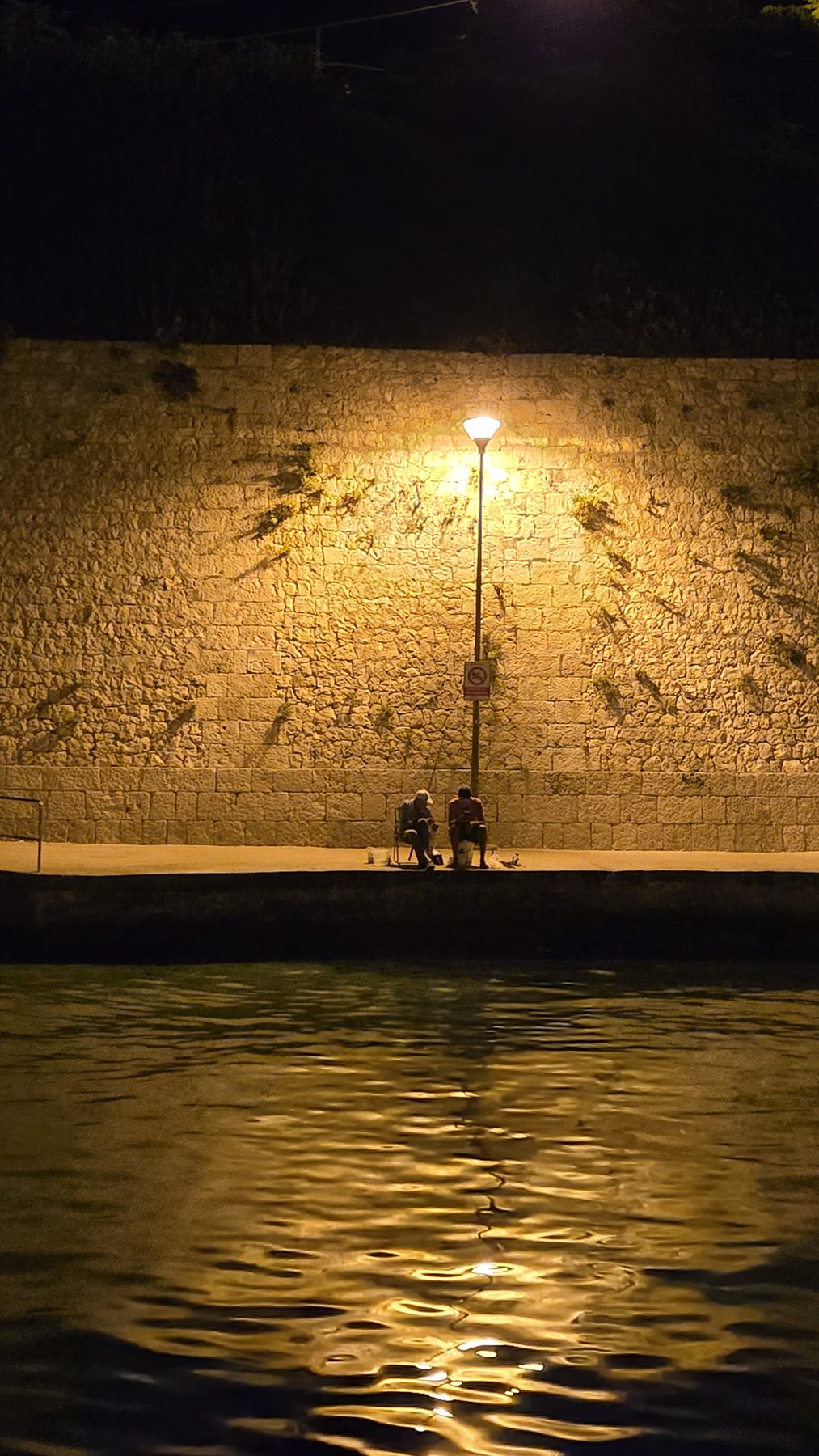
The port in the evening — two people fishing, and nobody else
Why winter is the real season for this work.
In summer people arrive already busy. There is the sea, the heat, the appetite for doing. It is beautiful and it has its own value, but the work has to compete with the light.
In winter there is nothing to compete with. The days are short. There is no restaurant to get to, no beach to make it to before it fills. There is one fire and a long evening, and a person who has finally run out of things to attend to. That is when the thing that has been waiting underneath gets its turn.
Almost everything real that has happened here happened in the dark, in front of a fire, in a month when nobody expected anything of anyone.
One last thing, about fire.
When I was writing about the labyrinth that became my logo, I went looking for the oldest one anyone can date. It is scratched into a clay tablet from a palace at Pylos in Greece, around 1200 BC. The reason it survived three thousand years is that the palace burned down. The fire baked the clay and kept the drawing.
I have thought about that a lot. That the thing we still have, we have because something burned.
The door here is open through December and January. Fewer people, longer evenings, a fire every day. If some part of you sat up reading this, that is usually worth listening to.
— Nikita